
Vanshavali – About us
Brahma Ji
Brahma is a principal deity in Hinduism, revered as the creator god. He is often linked with the Vedic god Prajapati.
- Believed to have emerged from the golden cosmic egg (Hiranyagarbha).
- Alternatively described as arising from a lotus springing from the navel of Lord Vishnu.
- Credited with creating the universe, natural elements, and the first beings—including sages, gods, and humans.
- His act of self-creation (Svayambhu) reflects deep philosophical themes in Sanatan Dharma, emphasizing the eternal cycle of existence.
- Brahma’s narrative symbolizes creation from within the self, highlighting ideas of self-manifestation, cosmic order, and the unity of existence.
- His mythology embodies the Sanatan vision of cyclical creation and dissolution.
Kardama Muni
- Lord Brahma himself is also called Prajapati, as he created Maharishis through austerity, penance, worship, trance, and bhakti yoga, later giving parts of his body to these saintly beings.
- Kardama Muni was a Prajapati, directly born from the shadow of Lord Brahma.
- In Hinduism, Prajapatis are great beings responsible for the creation of living beings, considered sons of Brahma.
- Kardama Muni married Devahuti, daughter of Swayambhuva Manu and Shatarupa.
- Together, they had ten children: nine daughters are Kalā, Anasuya, Shraddha, Havirbhu, Gati, Kriya, Khyati, Arundhati, Shanti and only son is Kapila Maharishi.
Kapila Muni/ Kapila Maharishi
- The tenth child, Kapila, is regarded as the fifth incarnation of Lord Vishnu.
- Kapila possessed divine power, wisdom, and knowledge.
- His wife was Dhriti.
- The Kapila family was known for being highly knowledgeable and talented, contributing greatly to spiritual traditions.
Sage Kapila, son of Kardama and Devahuti, emphasized the duality of Purusha (consciousness) and Prakriti (matter), guiding seekers toward liberation through knowledge, renunciation, and self-realization. Rejecting blind rituals, he taught rational thought, meditation, and inner realization. His dialogue with Devahuti in the Bhagavata Purana remains foundational. Legends recount his spiritual energy burning King Sagara’s sons, leading to Ganga’s descent. Kapila’s teachings shaped Hindu metaphysics, influenced Vedanta, Yoga, Buddhism, and Jainism, and preserved Vedic wisdom, making him a pivotal yogi and philosopher.
Sage Kapila is an extraordinary figure in Hindu tradition, known as the founder of the Samkhya school, a philosopher, and an incarnation of Vishnu. Through his wisdom and spiritual legacy, Kapila remains one of the most revered sages in Hinduism.
In Families of Kapila Gotra, The transmission of Vedic knowledge and Karm Kand among Brahmins has been a continuous tradition sustained through oral recitation, ritual practice, and the guru–shishya (teacher–disciple) system. The Vedas, regarded as sacred revelations, were memorized with precision using methods like padapatha and krama patha to preserve their authenticity. Rituals such as Sandhyavandanam and Agnihotra embedded Vedic mantras into daily life, while ceremonies for birth, marriage, and death reinforced their cultural relevance. Gurukuls and pathshalas provided structured education, beginning with the Upanayana ceremony, while temples and mathas acted as centers of learning and practice.
Over generations, fathers, grandfathers, and gurus passed down chants, meanings, and ritual techniques, creating a living bond between past and present. Despite modernization and social change, Kapila gotras Brahmins have adapted by using printed texts, recordings, and digital platforms, ensuring continuity of this heritage. Thus, the learning of Karm Kand and Vedas remains both a spiritual duty and a cultural identity, preserved across centuries and evolving with time.
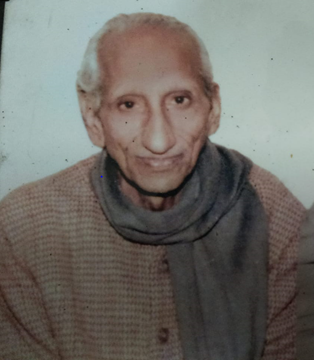
Pandit Shiv Dutt: A Life Rooted in Devotion and Dharma
Pandit Shiv Dutt, whose very name reflects his deep devotion to Lord Shiva, was a revered figure in the spiritual and cultural life of post-partition Delhi. Born and raised in Jhang province (now in Pakistan), he grew up in a joint family with his two brothers, immersed in the traditions and values of Sanatan Dharma.
Journey to Kashi
Seeking higher knowledge and spiritual enlightenment, Pandit Shiv Dutt traveled to Kashi, the spiritual capital for Sanatanis, to pursue the degree of Shastri. His time in Kashi not only enriched his understanding of scriptures but also strengthened his commitment to the path of devotion and service.
Partition and Resettlement in Delhi
The partition of India in 1947 forced Pandit Shiv Dutt, like countless other Hindus, to leave his ancestral home and migrate to Delhi as a refugee. Despite the hardships of displacement, he remained steadfast in preserving his faith, rituals, and cultural identity.
“Geeta Wale Pandit Ji”
In Delhi, Pandit Shiv Dutt began conducting Geeta Katha at Ajmeri Gate and in Old Delhi. These discourses became both a source of livelihood and a means of spiritual guidance for the community. His eloquence, devotion, and ability to connect with people earned him the affectionate title of “Geeta Wale Pandit Ji”, a name by which he became widely known in his circle and neighborhood.
Support from Bhagwan Devi
His wife, Bhagwan Devi, played an equally significant role in supporting the family. She contributed as a teacher in a primary school and actively participated in religious kirtans. Together, they created a household where spirituality and education went hand in hand.
Family and Legacy
The couple raised four children—Subhash Chander Sharma, Usha Rani, Asha Rani, and Gopal Krishan Sharma—instilling in them the values of rituals, devotion, and cultural heritage. The spiritual atmosphere at home, combined with their professional and religious engagements, ensured that the family remained deeply rooted in the traditions of Sanatan Dharma.
Enduring Influence
Pandit Shiv Dutt’s life story is not just one of personal devotion but also of resilience and cultural preservation. His journey from Jhang to Kashi, and finally to Delhi, reflects the broader narrative of countless families who safeguarded their faith during turbulent times. His legacy continues through the values and sanskars he imparted to his children and community.
Family and Legacy
The couple raised four children—Subhash Chander Sharma, Usha Rani, Asha Rani, and Gopal Krishan Sharma—instilling in them the values of rituals, devotion, and cultural heritage. The spiritual atmosphere at home, combined with their professional and religious engagements, ensured that the family remained deeply rooted in the traditions of Sanatan Dharma.
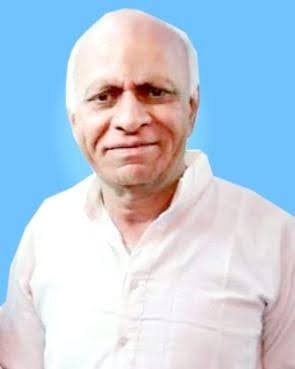
Pandit Subhash Chander Sharma
The Journey of Pandit Subhash Ji
Pandit Subhash Ji, the elder son of Pandit Shiv Dutt and Bhagwan Devi Ji, grew up with honesty, simplicity, and high thinking as the guiding principles of his life. From a young age, he carried the weight of responsibility on his shoulders. Having witnessed the difficult days of his family, he became an earner at a tender age, determined to support them with dignity and perseverance.
Under the loving guidance of his parents, he learned the sacred rituals, puja, path, and karm kands. Even as a child, he stood beside his parents, assisting them in their spiritual duties and absorbing the values of devotion and discipline.
Through sheer hard work and the blessings of elders, Pandit Subhash Ji secured a central government job. Yet, despite his professional commitments, he never abandoned his spiritual path. Throughout his life, he continued to practice and uphold the rituals and traditions that defined his identity as a priest and a man of faith.
His legacy lives on—not only through his children but also through the community he touched. The values and sanskars he imparted remain a guiding light, inspiring others to walk the path of honesty, responsibility, and devotion.
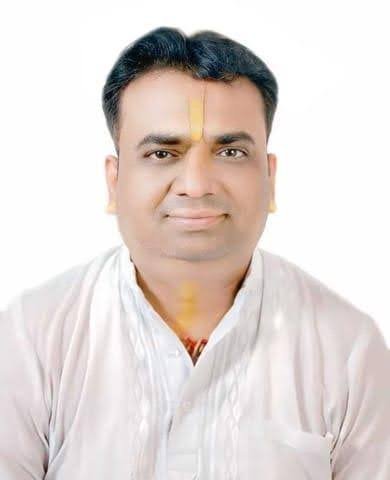
Inspirational Biography of Acharya Shri Anurag Sharma Ji
Acharya Shri Anurag Sharma Ji, the eldest son of Pandit Subhash Chander Sharma and Mrs. Vijay Sharma, has lived a life deeply rooted in knowledge, devotion, and discipline. From his earliest years, he displayed brilliance in studies and a natural inclination toward rituals, embodying the values instilled in him by his family.
A Childhood of Curiosity and Devotion
Even as a child, Acharya Shri was captivated by the mysteries of astrology. His fascination grew so strong that after completing his tenth class board examinations, he began learning the preparation of Kundalis under the guidance of his grandfather. This marked the beginning of his lifelong journey into the sacred sciences.
Guidance from Gurus and Family Legacy
Acharya Shri was blessed to receive profound knowledge of Pushtimarg and the Vedas from his revered grandfather, Vedant Bhushan Shri Hari Krishan Shastri Ji. His grandfather not only taught him scriptures but also performed the Yajnopavit Sanskar for him and imparted the Guru Mantra, laying the spiritual foundation of his life.
Bond with His Father
After the retirement of his father, Pandit Subhash Ji, Acharya Shri spent countless hours learning and discussing astrology with him. His father’s wish was clear: that his son should not only inherit the family’s spiritual legacy but also pursue professional degrees in astrology to blend tradition with formal education.
Academic Excellence and Professional Pursuits
Honoring his father’s aspirations, Acharya Shri pursued higher studies in astrology. He successfully completed his Graduation in Astrology (Jyotish Shastri) and went on to achieve Post-Graduation in Astrology (Jyotish Acharya). His thirst for knowledge did not stop there—he also earned a Diploma in Advanced Numerology, further expanding his expertise in the mystical sciences.
A Life of Purpose and Legacy
Today, Acharya Shri Anurag Sharma Ji stands as a beacon of wisdom, combining the spiritual teachings of his forefathers with modern academic rigor. His journey reflects the perfect harmony of devotion, discipline, and determination. Through his knowledge of astrology, numerology, and Vedic traditions, he continues to guide individuals and communities, carrying forward the rich legacy of his family.
His life is a testament to the power of curiosity, the blessings of elders, and the unwavering pursuit of knowledge. Acharya Shri’s story inspires generations to honor tradition while embracing education, proving that true wisdom lies in balancing both.
Acharya Shri Anurag Sharma Ji lives by two guiding principles: “Knowledge is Power” and “Karma Sidhant” (the Doctrine of Action). These beliefs are not mere words for him, but the very foundation of his spiritual and professional journey.
Anchored in these principles, Acharya Shri has never ceased his quest for deeper understanding. Even after attaining professional qualifications, he continues to study scriptures, refine his astrological insights, and explore the vast ocean of spiritual knowledge.